

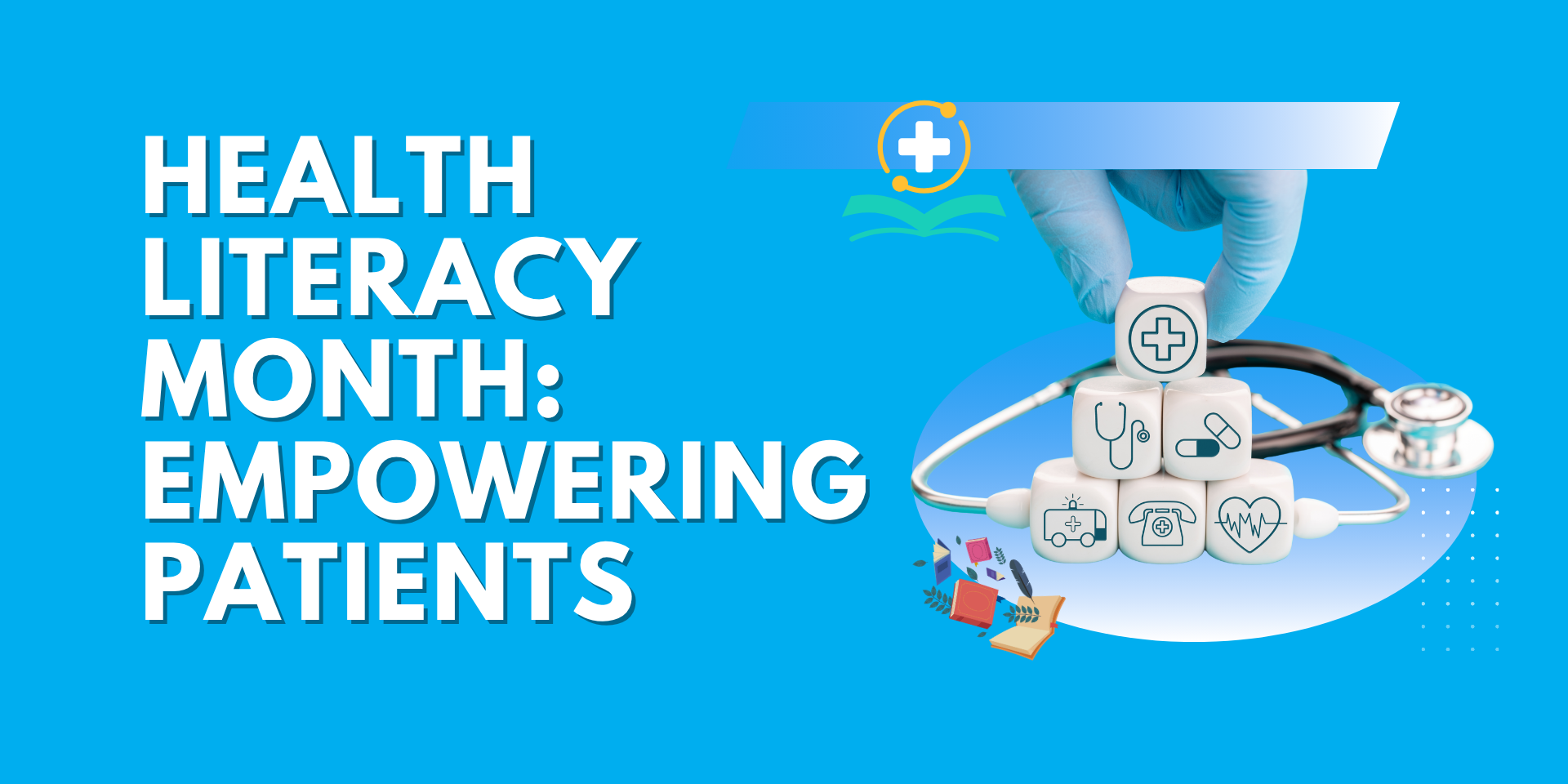
Every October, the healthcare community observes Health Literacy Month, a time to raise awareness about the importance of helping patients understand health information so they can make informed choices about their care.
In healthcare, communication is everything. A well-explained diagnosis, clear medication instructions, or a compassionate conversation can make all the difference in a patient’s journey. Health literacy ensures that patients are not just hearing information but truly understanding it, empowering them to actively participate in their own health decisions.
What Is Health Literacy?
The World Health Organization (WHO) explains health literacy as the ability to find, understand, and use health information and services to make smart choices about one’s health.
In simpler terms, health literacy means more than just reading a prescription or following instructions, it’s about being able to:
- Understand medical terminology, diagnoses, and test results.
- Follow treatment or medication schedules accurately.
- Navigate the healthcare system and know where to seek help.
- Ask informed questions and participate in care decisions confidently.
However, not all patients find this easy. Many struggles with complex forms, unfamiliar medical language, or fear of asking “the wrong question.” This lack of clarity can lead to confusion, missed treatments, and even preventable hospitalizations.
This is why healthcare providers and organizations have a crucial responsibility: to communicate in ways that empower rather than overwhelm.
Why Health Literacy Matters for Healthcare Organizations
Health literacy is directly linked to patient safety, satisfaction, and outcomes. When patients understand their care instructions, they are more likely to follow them correctly, leading to fewer complications and better overall health.
Conversely, poor health literacy can result in:
- Medication errors or non-adherence.
- Increased hospital readmissions.
- Higher healthcare costs.
- Lower patient trust and satisfaction.
Research from the U.S. Department of Health and Human Services shows that nearly 9 out of 10 adults struggle with health information, especially when it involves medical decisions or paperwork. That means even well-educated or experienced patients may find it challenging to process complex health details.
For healthcare organizations, improving health literacy means reducing risk, improving quality of care, and strengthening patient relationships. It’s not just good practice, it’s a fundamental part of patient-centered care.
How Clinics and Healthcare Teams Can Promote Health Literacy
Building a culture of health literacy takes effort, collaboration, and consistency. Here are practical ways healthcare organizations can make meaningful improvements:
- Communicate using plain language.
Avoid medical jargon when explaining diagnoses or treatments. For instance, instead of “hypertension,” say “high blood pressure.” Ask patients to repeat the information in their own words to confirm understanding (the “teach-back” method). - Encourage open and judgment-free communication.
Many patients hesitate to admit when they don’t understand something. Encourage questions and reassure them that it’s okay to ask for clarification. - Use visuals and digital tools.
Charts, diagrams, and videos can simplify complex information. Digital patient portals can also give patients convenient access to their health data and educational materials. - Provide multilingual resources.
Offering translated materials and culturally sensitive content helps patients from diverse backgrounds feel seen, respected, and understood. - Train all staff members — not just clinicians.
Front desk staff, nurses, and administrative assistants all play a role in patient communication. Regular training ensures consistency and clarity at every level. - Simplify written materials.
Review your forms, brochures, and discharge instructions. Aim for readability at a 6th–8th grade level and highlight key information in plain language. - Create feedback loops.
Ask patients for input on whether they found your materials or explanations clear. Use this feedback to continuously improve.
The Role of Technology and Virtual Support
With the rise of telehealth and digital care, virtual medical assistants and healthcare support teams now play an even more important role in improving patient communication. They help ensure follow-ups are clear, forms are properly explained, and patients have the guidance they need to manage their care.
Technology can also help reduce barriers by:
- Sending friendly appointment reminders and medication alerts.
- Offering educational content through mobile apps or email.
- Providing accessible online chat or hotline support for patient inquiries.
When used thoughtfully, technology becomes an extension of health literacy, helping patients stay informed, engaged, and supported every step of the way.
Empowering Patients, Strengthening Care
Health literacy isn’t just about sharing information, it’s about building understanding, trust, and empowerment. When patients truly understand their care, they’re more likely to take an active role in their treatment, follow through with care plans, and maintain healthier lifestyles.
As we celebrate Health Literacy Month this October, let’s remember that every interaction, every conversation, explanation, or piece of written material, can make a difference. By prioritizing clear communication, healthcare organizations and clinics can ensure that every patient feels informed, respected, and in control of their health journey.
Because when patients understand their health, everyone benefits, patients, providers, and the entire healthcare community.