
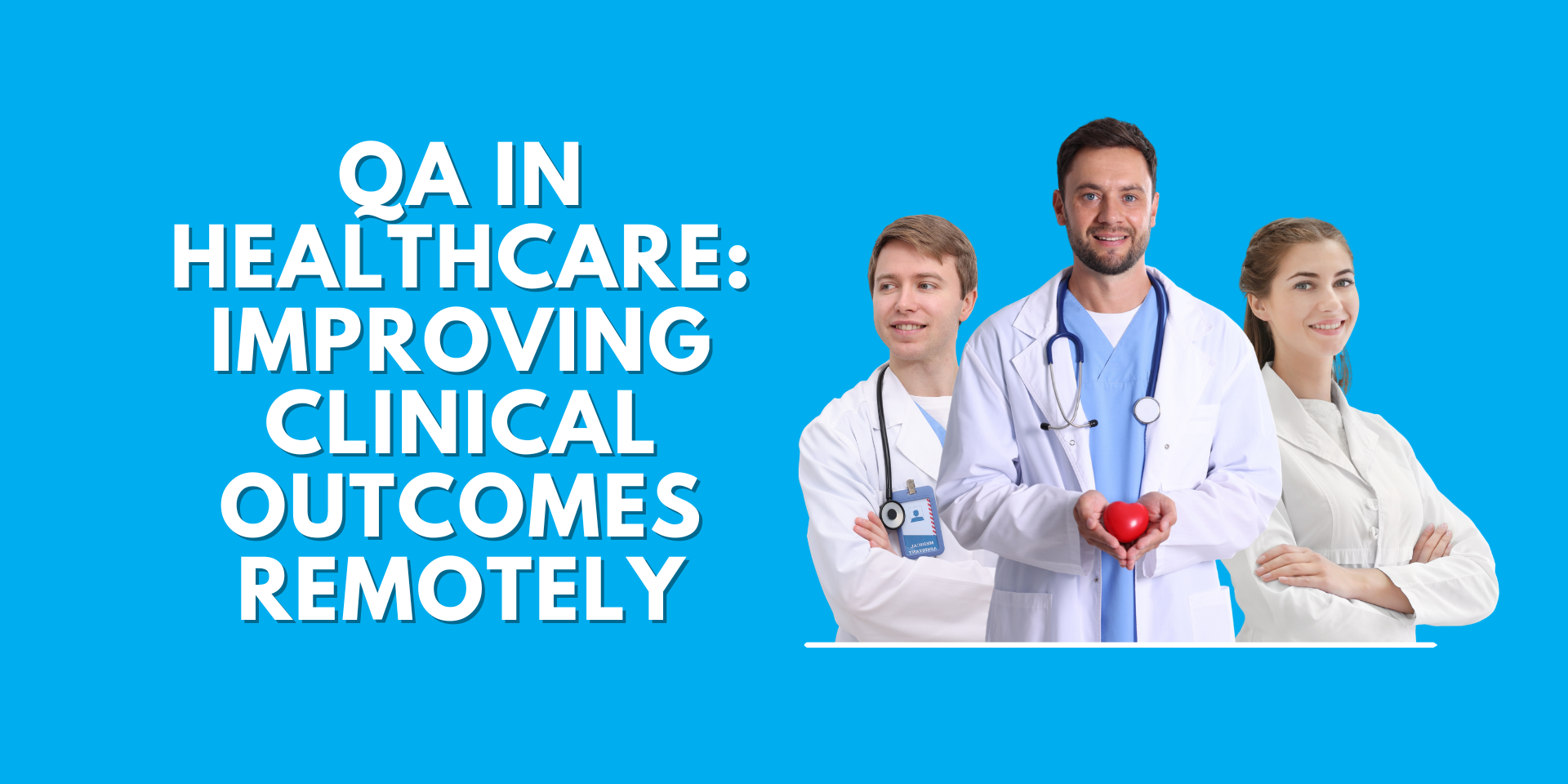
Quality Managers carry one of the most critical responsibilities in healthcare: safeguarding patient outcomes while ensuring compliance, efficiency, and operational excellence. In today’s increasingly distributed care environments—telehealth, multi-site practices, and remote teams—the traditional approach to quality oversight is no longer enough.
This is where medical quality assurance services step in.
Remote QA in healthcare is not about distancing oversight. It’s about strengthening it—through structured systems, data-driven monitoring, and continuous improvement processes that operate beyond the physical walls of a clinic or hospital.
For Quality Managers, the question is no longer if remote QA is viable. The question is how to implement it effectively to improve clinical outcomes.
The Shift Toward Remote Quality Oversight
Healthcare delivery has evolved rapidly. Virtual visits, outsourced administrative support, and remote clinical documentation are now standard in many organizations. With this shift comes increased complexity in maintaining quality standards across systems and teams.
Medical quality assurance services provide structured remote support that includes:
- Clinical documentation audits
- Compliance monitoring
- Performance tracking
- KPI reporting
- Risk identification and mitigation
When done correctly, remote QA enhances transparency and consistency across departments—without increasing internal workload.
What a Remote QA Professional Actually Does
It helps to make this concrete. A remote quality assurance professional embedded in your healthcare organization is not a passive reviewer — they are an active participant in your quality ecosystem. On a day-to-day basis, this may look like conducting structured chart audits against established clinical criteria, flagging documentation gaps directly to providers, monitoring regulatory updates that affect your compliance posture, and compiling performance data into actionable reports for leadership review.
The work is specific, systematic, and ongoing. And because it is handled remotely, it integrates into your existing workflows without requiring additional office space, equipment overhead, or the logistical complexity of expanding an on-site team.
Why Remote QA Matters for Clinical Outcomes
Quality assurance is often viewed as a compliance function. In reality, it is a clinical safeguard.
Strong QA systems directly impact:
- Diagnostic accuracy
- Documentation integrity
- Treatment consistency
- Regulatory adherence
- Patient safety
When documentation errors, coding inaccuracies, or compliance gaps go unnoticed, patient outcomes suffer—and so does organizational reputation.
Medical quality assurance services ensure that every clinical process aligns with established standards, whether the team is on-site or remote.
The Real Cost of QA Gaps: A Closer Look
The downstream consequences of undetected quality gaps extend well beyond compliance risk. Coding inaccuracies lead directly to claim denials and delayed reimbursements — creating revenue cycle disruptions that consume time and resources to resolve. Documentation inconsistencies introduce ambiguity into clinical records, which can affect care decisions and expose organizations to liability. Regulatory violations, even unintentional ones, carry audit risk and reputational consequences that are difficult to recover from quickly.
For Quality Managers, the business case for proactive QA investment is straightforward: the cost of identifying and correcting a gap early is a fraction of the cost of managing a preventable failure after the fact. Remote medical quality assurance services are, at their core, a risk management strategy with measurable financial and clinical returns.
Key Areas Where Remote QA Improves Performance
1. Clinical Documentation Accuracy
Incomplete or inconsistent documentation affects care continuity and reimbursement.
Remote QA teams can:
- Conduct systematic chart reviews
- Identify missing or conflicting entries
- Ensure ICD and CPT coding alignment
- Provide structured feedback to providers
Accurate documentation reduces claim denials and supports better clinical decision-making.
2. Compliance and Regulatory Monitoring
Healthcare regulations continue to evolve. Keeping up requires dedicated attention.
Remote medical quality assurance services help monitor:
- HIPAA compliance
- CMS guidelines
- Internal policies and SOPs
- Credentialing and licensing updates
For Quality Managers, this provides an additional layer of protection without stretching internal teams thin.
3. Performance Metrics and KPI Tracking
Quality improvement begins with measurement.
Remote QA systems can track:
- Patient wait times
- Readmission rates
- Denial rates
- Provider documentation scores
- Clinical quality benchmarks
By consolidating and analyzing these metrics remotely, Quality Managers gain actionable insights instead of fragmented data.
4. Risk Identification Before It Escalates
Reactive quality management is expensive. Proactive quality management is strategic.
Through regular audits and structured reporting, medical quality assurance services identify trends such as:
- Repeated documentation gaps
- Coding inconsistencies
- Compliance vulnerabilities
- Workflow inefficiencies
Addressing these early prevents larger operational and financial consequences.
The Strategic Role of Quality Managers in Remote QA
Remote QA does not replace Quality Managers. It amplifies their impact.
Your role shifts from being buried in manual audits to leading:
- Data interpretation
- Root cause analysis
- Process redesign
- Provider education
- Continuous improvement initiatives
When routine monitoring is handled systematically through remote medical quality assurance services, you can focus on strategic leadership instead of administrative overload.
If you find that your current capacity makes it difficult to move from audit execution to strategic leadership — that the day-to-day monitoring work is absorbing time that should be spent on improvement initiatives — that is a staffing signal worth paying attention to. Many Quality Managers in this position have found that bringing in dedicated virtual QA support is what finally creates the space to lead at the level their role actually requires. The right support structure does not just lighten the load. It changes what becomes possible.
Technology as the Enabler
Remote quality oversight depends on secure and integrated technology systems.
Effective programs leverage:
- EMR audit tools
- Secure cloud-based reporting platforms
- Data dashboards
- Encrypted communication channels
Technology allows real-time collaboration between remote QA specialists and internal teams—without compromising data security.
Quality Managers should prioritize vendors or internal teams that demonstrate strong cybersecurity protocols and healthcare-specific experience.
Common Concerns About Remote QA (And Why They’re Manageable)
Concern 1: Loss of Control
In reality, structured reporting and defined metrics increase visibility rather than reduce it.
Concern 2: Data Security
Reputable medical quality assurance services operate within strict HIPAA-compliant frameworks and encrypted systems.
Concern 3: Communication Gaps
Clear escalation pathways, scheduled reporting cycles, and defined KPIs eliminate ambiguity.
The key is not whether QA is remote—but whether it is structured.
Building a High-Impact Remote QA Framework
If you are evaluating or expanding medical quality assurance services, focus on these core pillars:
1. Standardized Audit Protocols Clear criteria for documentation reviews and compliance checks ensure consistency.
2. Defined KPIs Quality must be measurable. Establish benchmarks aligned with organizational goals.
3. Feedback Loops QA findings should translate into actionable provider feedback and training.
4. Continuous Monitoring Quality is not a quarterly event. It is an ongoing process.
5. Transparent Reporting Dashboards and structured reports keep leadership aligned and informed.
When these components are in place, remote QA becomes a strategic driver of clinical excellence—not just a compliance tool.
Is Your Organization Ready for Remote QA?
Before expanding or formalizing a remote QA program, it helps to assess where your organization currently stands. Consider these questions honestly:
- Are documentation audits happening consistently, or reactively?
- Does your team have the bandwidth to monitor compliance and drive improvement initiatives simultaneously?
- Are KPIs being tracked, reported, and acted upon in a structured cycle?
- Do QA findings reliably make their way back to providers as usable feedback?
If the honest answer to any of these is “not consistently,” that is not a failure of process — it is typically a capacity issue. Most Quality Managers are not under-skilled. They are under-resourced. And that distinction matters, because it means the solution is not a new strategy. It is the right support.
How Virtual Staffing Powers Remote QA
Remote medical quality assurance services do not operate themselves. Behind every structured audit, every compliance report, and every KPI dashboard is a skilled professional doing focused, detail-oriented work. For many healthcare organizations, the most practical and cost-effective way to access that expertise is through virtual staffing.
A virtual QA specialist brings healthcare-specific knowledge — clinical documentation standards, coding frameworks, regulatory requirements — without the overhead of a full-time on-site hire. They integrate into your existing systems, align with your reporting cycles, and work within your established protocols. The result is consistent, scalable quality oversight that grows with your organization’s needs.
For Quality Managers who are already clear on what needs to happen but stretched too thin to execute it all, a virtual staff member dedicated to QA functions is often the bridge between where quality management is and where it needs to be. If that sounds like the position you’re in, it may be worth exploring what a virtual QA support model could look like for your team specifically.
The Competitive Advantage of Strong QA Systems
Healthcare organizations that invest in robust medical quality assurance services see measurable improvements in:
- Patient satisfaction
- Revenue cycle performance
- Regulatory readiness
- Provider accountability
- Operational efficiency
Most importantly, they see stronger clinical outcomes.
Quality Managers who embrace remote QA models position their organizations ahead of regulatory shifts, staffing challenges, and operational bottlenecks.
Final Thoughts
Improving clinical outcomes is not solely about advanced treatments or new technologies. It is about consistent execution of standards across every patient interaction.
Medical quality assurance services make that consistency scalable.
As a Quality Manager, your leadership sets the tone for accountability, compliance, and performance. By integrating structured remote QA into your framework, you gain visibility, strengthen oversight, and reduce preventable risks—without overwhelming your internal team.
Remote quality management is not a compromise. It is a strategic evolution.
And in today’s healthcare environment, strategic evolution is not optional—it’s essential.